Forget the Channel: lionelwindsor.net
-

Why learn biblical Hebrew?
Learning Hebrew takes organisation, discipline and effort. Is the hard work is worth it? Why learn Hebrew in the first place anyway?
-

Speech not works (Romans 10:8-10)
In my book, I argue that the mention of the “mouth” alongside the “heart” is a key to Paul’s argument about the nature of salvation.
-
Preaching sermons and leading congregations: what’s the connection? (Exploring some implications)
Paper, audio and video of a conference paper exploring further questions relating to my essay, “Preachers and Leaders”
-
Publication notice: The Seed, the Many and the One in Galatians 3:16
This essay offers a fresh interpretation of Galatians 3:16, by paying close attention to features of the source text on which it is based: Genesis 17.
-
Jesus Christ and the Revolution of Calling
Lecture 3 in the UNSW Campus Bible Study Easter Lecture Series 2015: “Jesus Christ and the Revolution of Identity” You are what you do? What do you do? That’s a question people often ask you when they meet you for the first time, isn’t it? They want to get to know you, what makes you tick,…
-
Jesus Christ and the Revolution of Security (Romans 2:17-29)
Paul’s letter to the Romans bears witness to a revolution that has occurred in his source of Jewish identity and security. It is a security revolution that has come about through Paul’s encounter with and knowledge of Jesus Christ.
-
Jesus Christ and the Revolution of Destiny
The Apostle Paul’s letters bear witness to the fact that his identity and his destiny had been revolutionised by his encounter with Jesus Christ.
-
His shame, my shame
Something always strikes me when I come to read the written accounts of Jesus’ final hours before his death. The Gospels do not dwell on the physical suffering in any kind of gory detail. Rather, what comes to the fore in these accounts, again and again, is Jesus’ shame and humiliation.
-
The True Meaning of Awesome (2 Samuel 6)
How should you relate to God? Relaxed, or reverent? Familiar, or fearful? Is God your mate, or your master?
-
The “End of the Law” (Romans 10:4)
In my book, I argue that the phrase “Christ is the end (τέλος) of the Law” in Romans 10:4 is illuminated by Romans 3:21, which states that the purpose of the Law is to testify to the gospel.
-
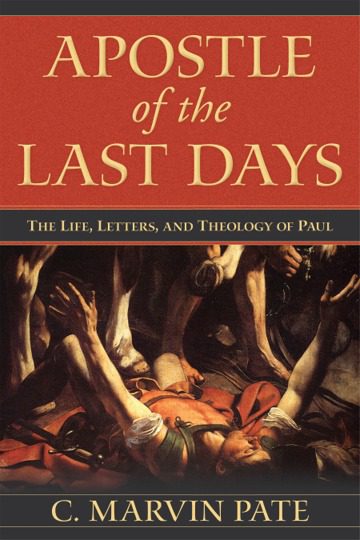
Review: C. Marvin Pate. Apostle of the Last Days: The Life, Letters, and Theology of Paul.
Pate argues that the “center” or hermeneutical key to Paul’s letters is found in an apocalyptic inaugurated eschatology.
-
Human speech–a neglected element of Romans 10
In my book, I argue that the concept of human speech is a vitally important–though very frequently neglected–component of Paul’s argument in Romans chapter 10.
-
How Not to Live Your Life (1 Samuel 15)
A sermon preached at St Augustine’s Church, Neutral Bay.
-
Paul is not offering himself as a substitute in Romans 9:3
In my book, I argue that Paul in Romans 9:3 is acting as a representative for Israel, not offering himself as a substitute.
-
The gift that keeps on taking (1 Samuel 8)
Where is your security found?
-
Paul’s vocation: The framework for Romans 9–11
In my book, I argue that Paul’s apostolic mission plays a decisive role in his argument about Israel in Romans 9-11.
-
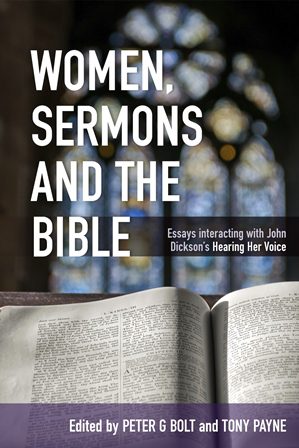
Andrew Heard: “A Brief Response to John Dickson’s Response to My Response”
Andrew Heard is the Senior Minister of EV Church. He has responded to John Dickson’s response to his paper engaging with an ongoing discussion over the meaning of the verb “teach” in 1 Timothy 2:12.
-
“Praise from people” in Romans 2:29 is describing an ideal synagogue teacher
In my book, I argue that the idea of receiving “praise” from human beings in Romans 2:29 is a reference to an ideal synagogue law-teacher.
-
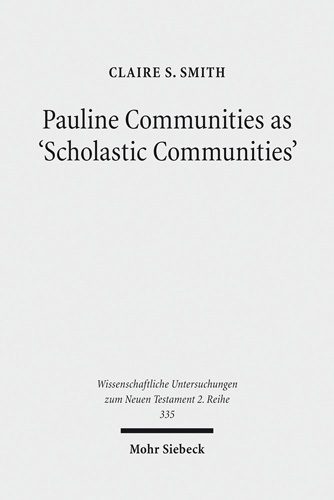
RBL review of Claire S. Smith, Pauline Communities As ‘Scholastic Communities’: A Study of the Vocabulary of ‘Teaching’ in 1 Corinthians, 1 and 2 Timothy, and Titus
At the Review of Biblical Literature, Steve Walton has positively reviewed Claire Smith’s book on the vocabulary of “teaching” in 1 Corinthians and the Pastoral Epistles.
-
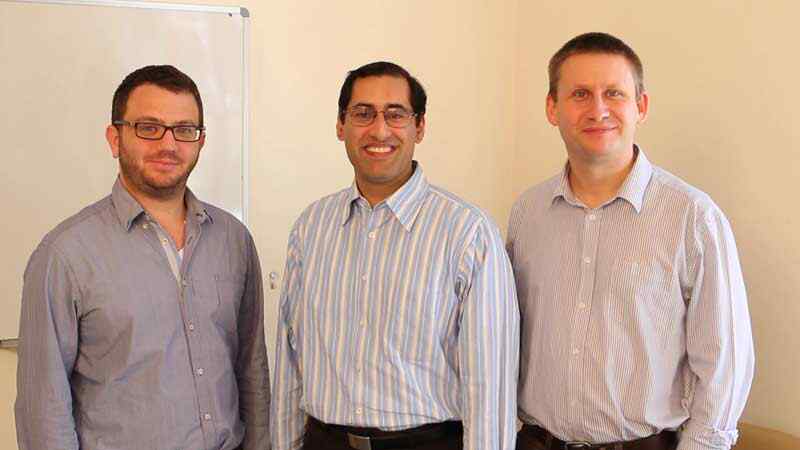
Faiths in Conversation
A Jew, a Muslim, and an Anglican Minister walk into a classroom … a community teaching event.
-
Romans 2:29 is not saying that all Christians are “spiritually circumcised”
In my book, I argue that Romans 2:28-29 should be understood as the conclusion of a coherent argument, set in the mainstream Jewish synagogue, which seeks to make a definite statement about Jewish (rather than simply Christian) identity.
-
Instruments of Peace – Neutral Bay Multifaith Service 2014
The Anglican contribution to the Neutral Bay Multifaith service 2014. The topic: “being instruments of peace”
-
Comments on two blog posts by John Dickson
The commenting feature on John Dickson’s blog is experiencing ongoing technical issues. I have placed my replies to some of his blog posts here.
-
Who is the uncircumcised Law-keeper in Romans 2:26-27?
In my book, I argue that the uncircumcised Law-keeper in Romans 2:26-27 should be understood as a Gentile synagogue adherent.
-
What does it mean to “rob temples” in Romans 2:22?
In my book, I argue that the term commonly translated as “robbing temples” is not referring to the robbery of pagan temples, but to the misappropriation of funds intended for the Jerusalem temple.


















Got any book recommendations?