Forget the Channel: lionelwindsor.net
-

When education is not the answer (Romans 2:17–27)
When education is not the answer (Romans 2:17–27). Amongst all the pragmatics & demands & struggles of ministry, you first need to know the why of ministry. You need deep and strong theology, and to apply that theology to your life & ministry.
-

This is huge (Ephesians 3:18–19)
God’s plans for his world, and his love for us in Christ, are vast and awe-inspiring. They change everything. That’s why need prayer to grasp them.
-
Where does God live? (Ephesians 3:16–17)
Can God’s presence be with us? If so, how? In bread and wine? In a tangible experience of worship? In Ephesians, Paul speaks about how Christ dwells among us.
-
Who are you praying to? (Ephesians 3:14–15)
Most people pray. But not everyone prays in the same way. Your view of God will have a profound effect on your prayer life. Who are you praying to?
-
My afflictions, your glory (Ephesians 3:12–13)
We can react to suffering by avoiding or escaping or denying or rationalising it. For Paul, the gospel of Christ leads to a profoundly different reaction.
-
God’s multidimensional wisdom (Ephesians 3:9–11)
Do you think being a Christian is boring? If so, maybe your view of God is one-dimensional. But Paul sees God and his purposes in vivid multidimensional glory.
-
The meaning of ministry (Ephesians 3:7–8)
Christian ministry is hard. So why be involved at all? Pragmatics and techniques alone can’t answer that question. We need to know the meaning of ministry.
-
The open secret (Ephesians 3:4–6)
How can we know God’s will? Some try to see God’s will in the progress of history. But this is disastrous. God’s will is something we can’t work out by ourselves.
-
The prisoner lifts his eyes (Ephesians 3:1–3)
It’s so easy for Christians to play the victim, and to define ourselves as victims. But Paul, even in prison under Roman rule, lifts his eyes to God’s grace in Christ.
-
Built together (Ephesians 2:20–22)
Is every church on its own? How are Christian believers connected with other believers with whom we don’t meet regularly: in our region, nation, and world?
-
“Do not weep for me, weep for yourselves…” (Luke 23:28)
Why do Christians lament? Sometimes we lament out of sympathy, but sometimes we weep for ourselves. This is the kind of lament that Jesus calls for here.
-
No second-class Christians (Ephesians 2:19)
Even if we don’t say it out loud, we can often act as if there are different classes of Christians. But the gospel teaches us there are no second-class Christians.
-
Christ the missionary (Ephesians 2:17–18)
Christ is a missionary. Christ does stranger evangelism. Christ preaches to the choir. Christ crosses cultures. Christ brings peace. So says the Apostle Paul. What does he mean?
-
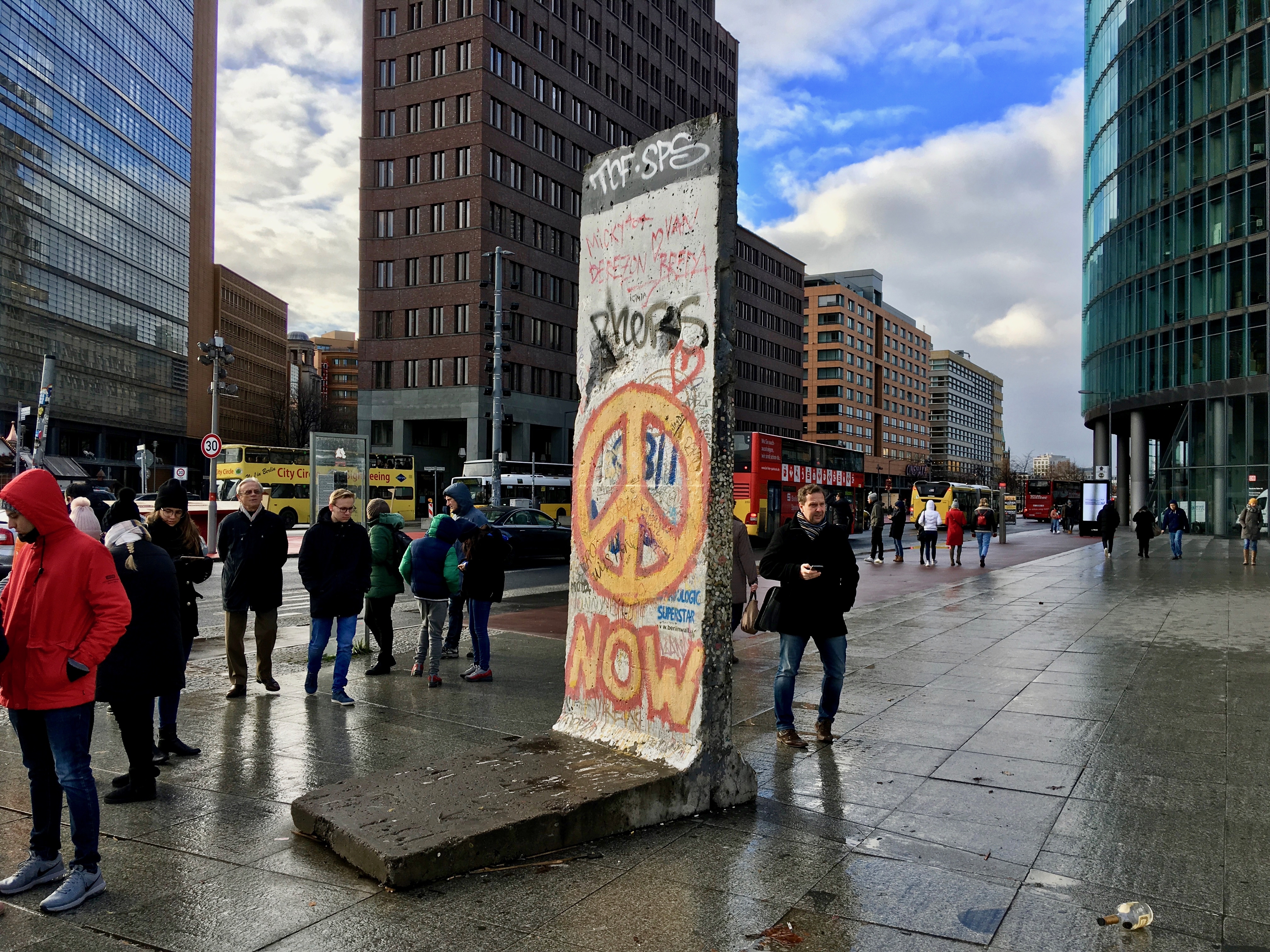
Christ the wall breaker (Ephesians 2:14–16)
In this broken and rebellious world, our healthy boundaries often become hostile walls. But the cross of Christ breaks down walls and brings reconciliation.
-
The blood that brings us close (Ephesians 2:11–13)
Despite our best desires and efforts, we humans are not very good at living up close with others. This has become devastatingly obvious in the recent Christchurch shootings. Yet in his letter to the Ephesians, Paul talks about a conflict that really was healed. This passage is about a real closeness that all believers in…
-
Good works and salvation: What’s the connection? (Ephesians 2:8–10)
A joke letter from an Australian church offering its financial donors priority access to heaven raises questions for all of us. Do our good deeds give us access to heaven? Or are our good deeds irrelevant? Where do our good deeds fit when it comes to salvation?
-
A question of security (Ephesians 2:6–7)
As I write this, New Zealand is shocked and grieving. My own nation Australia is shocked and grieving too, along with them. But news stories about terror attacks and shootings in our world are far too common, aren’t they? And whenever we hear of them, they bring to mind all sorts of questions. One of…
-
This love (Ephesians 2:4–5)
“God loves you”: if I say just those three words, you may not hear what I want you to hear. This is because of a communication problem that arises whenever Christians try to talk about biblical concept of God’s “love”. When we say “love” we mean one thing—something wonderful and life-changing. But the word means…
-
We too: the offenders (Ephesians 2:3)
Judgmentalism. It’s a bigger problem than we think. Judgmentalism is certainly a danger for God’s people. That’s because God’s people have God’s word. God’s word helps God’s people to see how wonderful God is, and how terrible humanity is in comparison. But Ephesians 2:3 contains two highly significant, emphatic words: “we too”. We too, says…
-
The root of the problem (Ephesians 2:1–2)
I hadn’t visited the dentist for years. Then I felt a tiny amount of pain in one of my teeth. But I ignored it. I didn’t want to bother with a dentist. Anyway, I had my own solution: I’d always brushed my teeth quite thoroughly, and was proud of it. So I just kept brushing.…
-
Captivated by Scripture: A personal reflection on D. W. B. Robinson’s legacy for biblical studies
What made Donald W. B. Robinson such an inspiring and influential teacher for generations of students? His commitment to being captivated by Scripture. This is a paper given by Lionel Windsor at the legacy day and launch of Donald Robinson Selected Works Volume 3: Biblical and Liturgical Studies & Volume 4: Historical Studies and Series…
-
The first thing to say about church (Ephesians 1:22–23)
Here in Ephesians 1:22–23, for the first time in his letter, the apostle Paul uses the word “church”. He’s taken quite some time to get to this point. That might make you think that the church isn’t very important to Paul. But actually, the reverse is true. This is a climactic statement. So far in…
-
Strength to live (Ephesians 1:19–21)
What do we do when we feel weak in the face of the powers that be? One response might be just to shut down, close ranks and find a bitter satisfaction in our identity as victims. Another response might be to try to fight as hard as we can to exert our power and dominance…
-
Conference: Christ, the Cross and Creation Care
I’ll be speaking at the “Christ, the Cross and Creation Care Conference”, Sydney. 8.30am to 3.30pm, Saturday 22 June 2019. A conference run by A Rocha Australia
-
What’s the point of theology? (Ephesians 1:17–18)
The full name of the college I teach at is “Moore Theological College”. That word “Theological” says something important about who we are. It reminds us about what we’re on about. Yes, the Bible is at the centre of everything we do. Yes, we seek to train people for ministry. Yes, we’re driven by the…
















Got any book recommendations?